
Wallet Infrastructure
Fiber is designed to make an onchain wallet feel as easy to use as a modern financial app—without giving Fiber unilateral control over your assets.
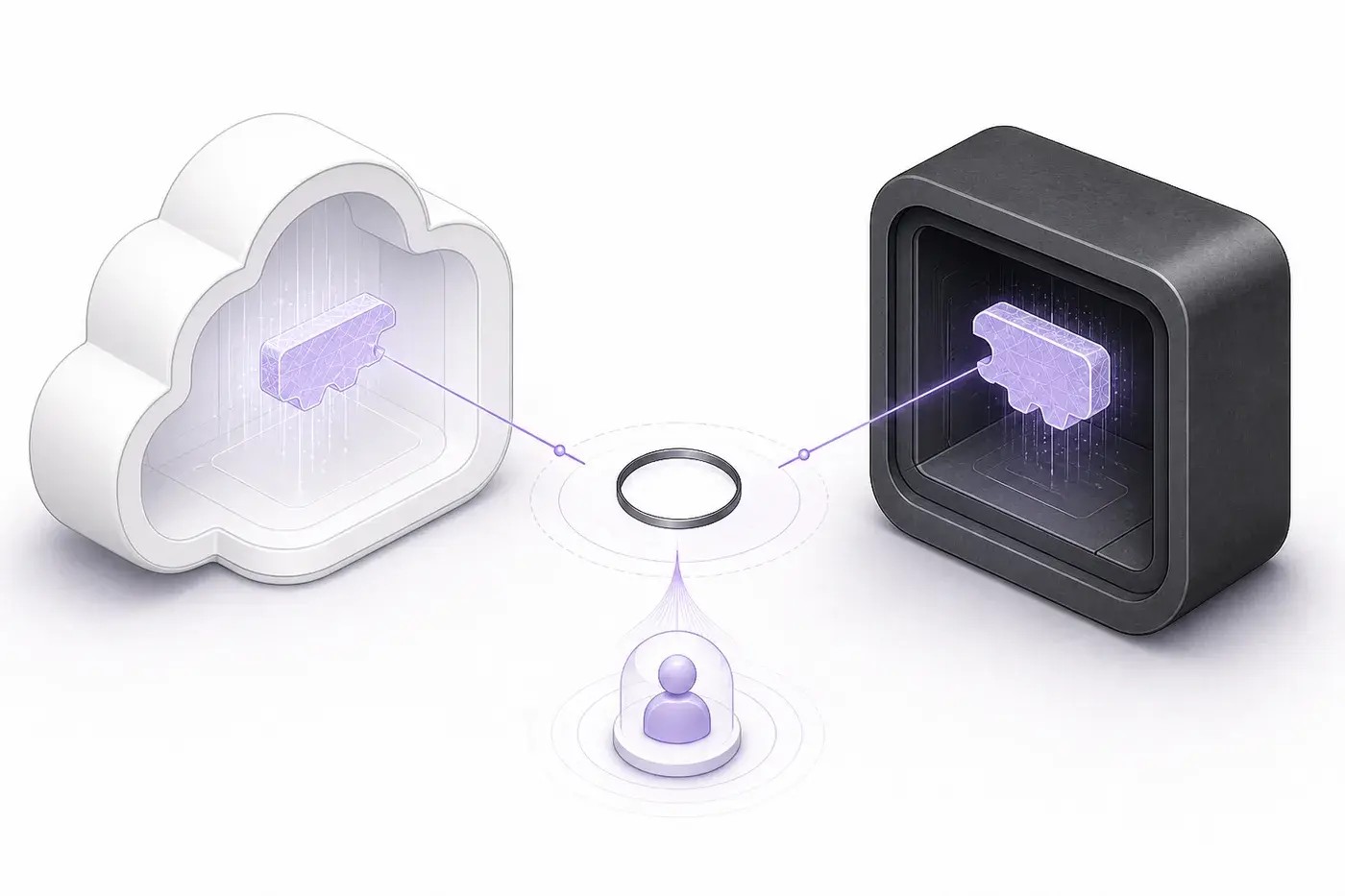
Users can create and access an account using familiar methods such as an email address or phone number. Behind the interface, Fiber coordinates the technical wallet operations while transactions remain subject to user authorization.
What the Infrastructure Does
Fiber’s wallet infrastructure is designed to:
- Create a wallet during signup without requiring users to manage a traditional seed phrase
- Authenticate users through familiar account-access methods
- Keep wallet key material divided across separate security boundaries
- Require user authorization before transactions are signed
- Support account recovery without turning Fiber into a custodian
- Coordinate private addresses, transaction preparation, network routing, and other onchain actions
See Security for more information about Fiber’s key architecture.
How the Wallet Works
Fiber does not hold assets in a company-controlled wallet and assign users an internal balance.
Instead, Fiber coordinates the systems around a non-custodial wallet. The app handles technical steps such as:
- Creating and accessing the wallet
- Deriving addresses for private deposits
- Preparing transactions for user approval
- Managing differences between supported networks
- Routing assets into and out of Fiber’s private environment
- Coordinating supported trades, transfers, and rewards
- Providing a familiar account recovery experience
Fiber simplifies these operations, but the authorization boundary remains with the user.
Transaction Signing
When an action requires a wallet signature, the necessary key shares are used through the authorized signing process.
Fiber may prepare the transaction and coordinate the required onchain steps, but the user must authorize the action through the supported account flow.
This allows Fiber to simplify deposits, transfers, trades, and other wallet activity without holding a conventional custodial key with unrestricted control over user assets.
Account Recovery
Recovery is designed around familiar account methods, such as a verified email address, phone number, device, and other supported security protections.
The goal is to let users regain access without relying on a traditional seed phrase and without giving Fiber unilateral spending authority.
Users should keep their account information and recovery methods secure and up to date. Losing access to all supported authentication and recovery methods may make the wallet difficult or impossible to recover.
The precise recovery process may evolve, but the core principle remains unchanged: simpler recovery should not require Fiber to take custody of user assets.
How to Think About Fiber
Think of Fiber less as a company-controlled wallet with your name attached to it, and more as orchestration built around keys that you control.
The wallet provides ownership and authorization. Fiber handles the awkward parts of using onchain finance, including:
- Address derivation for private deposits
- Transaction preparation
- Differences between supported networks
- Privacy routing
- Trades, transfers, and rewards
- Account recovery
These systems make Fiber feel like one modern financial app, even though multiple wallets, networks, protocols, and transaction steps may be involved underneath.
The authorization boundary always remains with the user. Fiber can prepare and coordinate an action, but it is not designed to independently authorize transactions or move user assets.
That boundary is the product: Fiber simplifies everything around the wallet without taking control of what is inside it.
What Makes Fiber Different
Custodial platforms are simple because the provider controls the wallet keys. Traditional self-custody gives users direct control, but often leaves them responsible for seed phrases, gas, network selection, transaction preparation, privacy tools, and recovery.
Fiber is designed to combine the strengths of both models:
- Familiar account access
- Non-custodial asset control
- Distributed key security
- Explicit user authorization
- Built-in privacy
- Cross-network orchestration
- A simpler recovery experience
- Access to rewards and wealth-building assets through one interface
Fiber makes onchain ownership more practical without hiding custody behind a familiar interface.