Privacy
A public blockchain is an open financial ledger that anyone can see.
Your wallet address may not display your name, but once it is connected to you, anyone can inspect its balances, transactions, and interactions over time. What begins as a pseudonymous address can become a detailed public record of your financial life.
Fiber’s job is to prevent that from happening.
Fiber makes privacy the default path for supported deposits, transfers, buys, sells, and rewards—not a separate mode users need to enable.
How Fiber’s Privacy Infrastructure Works
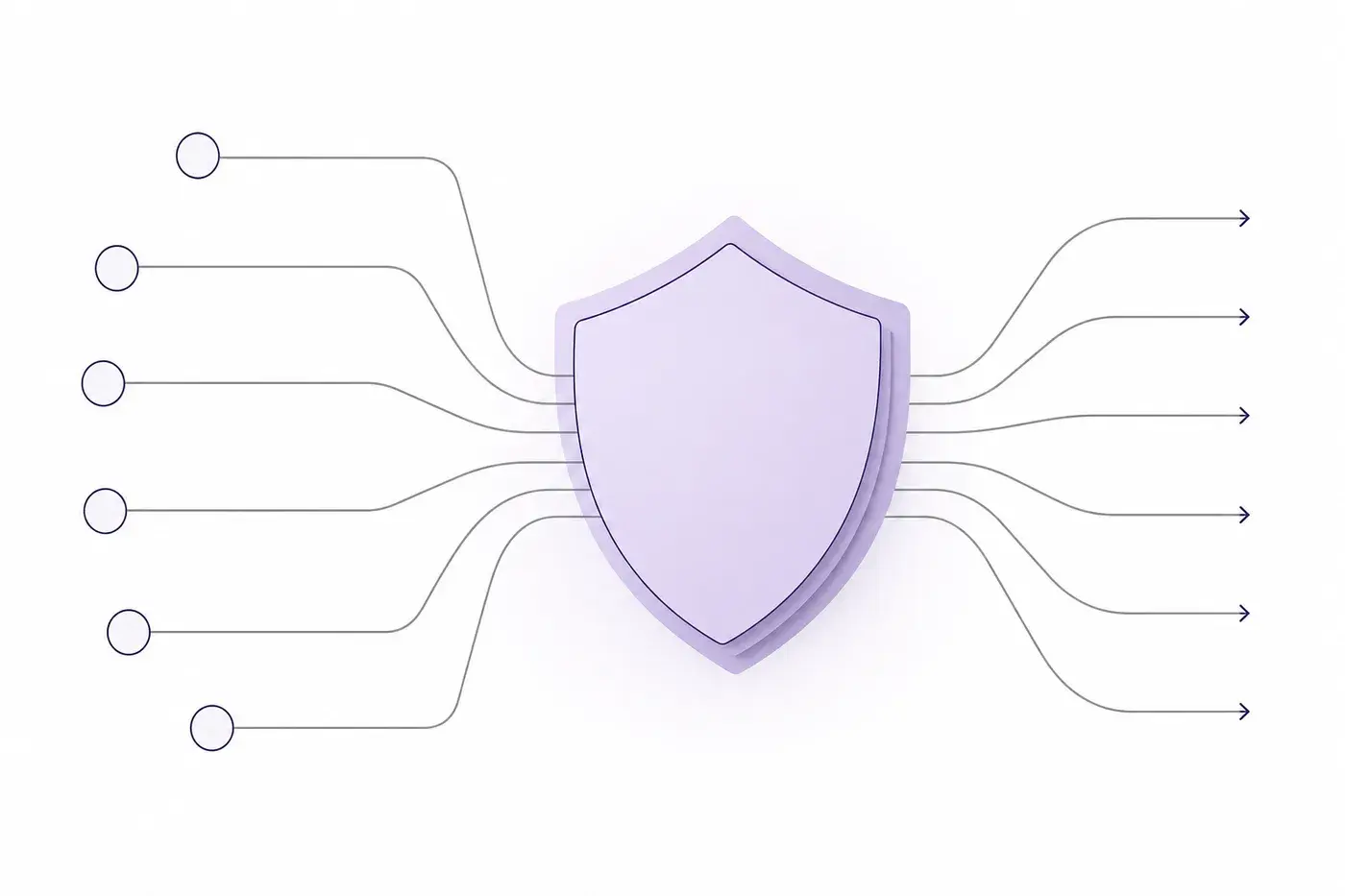
Fiber’s privacy engine is built on Railgun and settles on Ethereum.
This does not mean Fiber is limited to Ethereum. Users can deposit and withdraw supported assets natively across supported EVM networks and Solana.
Fiber handles the underlying network routing and privacy orchestration in the background. Users do not need to bridge assets manually, interact directly with Railgun, or manage a separate privacy wallet.
Once supported assets enter Fiber’s private environment, they are held through
the user’s private Railgun wallet, represented by a 0zk address.
Private Deposits
When you deposit supported assets into Fiber, you select the asset and network you want to use. Fiber supports native deposits from supported EVM networks and Solana.
Each deposit begins with a public transaction on the selected network. Where supported, Fiber uses one-time public addresses rather than repeatedly exposing the same permanent wallet address.
After the deposit is received, Fiber handles the required routing and moves the
assets into its Ethereum-settled private environment. The assets are then
associated with your private 0zk wallet address.
You do not need to view, create, or manage the 0zk address yourself. Fiber
handles the process as part of the normal deposit experience.
The original deposit remains visible on its originating blockchain. Fiber’s privacy protections apply once the supported assets enter Fiber’s private environment.
Private Transfers
Transfers between Fiber users can remain within Fiber’s private environment.
Supported assets are transferred using Railgun’s private transfer infrastructure. This prevents the transfer from publicly exposing either user’s complete private balance, Fiber transaction history, or a permanent link between their accounts.
When withdrawing to an external wallet, Fiber handles the required routing and sends the assets to the selected supported EVM network or Solana.
The recipient can see the payment they receive, and the withdrawal remains
visible on the destination blockchain. However, the transaction is designed
not to reveal your private 0zk address, complete Fiber balance, or broader
internal activity.
Private Swaps (Buys and Sells)
When you buy or sell an asset through Fiber, the transaction is designed not to become a simple public record connected to your complete wallet history.
For a supported transaction, Fiber may:
- Unshield the required assets through a one-time public address
- Execute the buy or sell through the relevant liquidity provider or protocol
- Shield the resulting assets back into your private
0zkwallet
The trade still uses public blockchain infrastructure, and parts of the execution remain visible onchain. However, the transaction path is designed to make it more difficult for outside observers to connect the trade to your complete Fiber balance and financial history.
Pricing, spreads, slippage, liquidity, execution, protocol, and smart-contract risks still apply.
Private Rewards
If rewards are enabled, eligible stablecoins can earn rewards while remaining within Fiber’s private environment.
Supported stablecoins may be deposited into a Morpho vault with exposure
limited to BTC- and ETH-backed lending markets. The resulting vault shares are
then shielded back into your private 0zk wallet.
The underlying vault, lending activity, and protocol remain onchain. Fiber’s privacy layer is designed to prevent your complete balance, rewards position, and broader financial history from being easily connected to that activity.
In other words, Fiber provides rewards without turning your balance into a public billboard.
Privacy does not create the underlying return or remove its risks. Reward rates are variable and are not guaranteed. Lending, liquidity, asset, protocol, and smart-contract risks still apply.
See Rewards on Stablecoins for more information about eligible balances, reward sources, rates, and risks.
What Fiber Privacy Protects
For supported assets and networks, Fiber is designed to protect information such as:
- Balances held inside Fiber
- Transfers between Fiber users
- Supported buys and sells
- Eligible rewards balances and activity
- The connection between individual transactions and your broader Fiber history
Privacy support may vary depending on the asset, network, transaction type, and underlying service used.
What Privacy Does Not Mean
Fiber privacy does not mean that:
- Public deposits and withdrawals disappear from the blockchain
- A payment is hidden from the person receiving it
- Every asset and network has identical privacy support
- Public blockchains, liquidity providers, or third-party protocols are no longer involved
- Every individual transaction is invisible
- Privacy removes market, execution, protocol, or smart-contract risks
- Users are anonymous or exempt from applicable laws, taxes, or reporting obligations
Fiber is designed to prevent your complete financial life from being easily reconstructed through public blockchain data. It does not remove the public nature of the underlying networks or make every transaction invisible.